Buy profiservice.eu ?
We are moving the project
profiservice.eu .
Are you interested in purchasing the domain
profiservice.eu ?
domain@kv-gmbh.de · 0541-91531010
Buy profiservice.eu ?
What is grammatically correct: Cogito ergo sum or Ego cogito ergo sum?
The grammatically correct phrase is "Cogito ergo sum." This is the original Latin phrase coined by philosopher René Descartes, which translates to "I think, therefore I am." The phrase emphasizes the primacy of thought and self-awareness in establishing one's existence. **
What was Nietzsche's objection to Cogito ergo sum?
Nietzsche's objection to Cogito ergo sum, or "I think, therefore I am," stems from his belief that the self is not a fixed entity but rather a fluid and ever-changing construct. He argued that the idea of a stable and unified self, as implied by Descartes' statement, is an illusion. Nietzsche believed that the self is a product of various conflicting forces and influences, and that there is no essential core or unchanging identity to be found within it. Therefore, he rejected the notion that one's existence can be proven simply through the act of thinking. **

Similar search terms for Cogito
Top-Angebote
Products related to Cogito:
-
FT Synthetics FT Solutions Performance UDL 90 Pallet of 64The FT Solutions Performance UDL 90 (formerly FT Synthetics Silver) Underlayment is composed of 100% recyclable water-resistant polyolefin. UDL 90 underlayment is lightweight and durable and also provides the best protection available while also...4660,46 $*Shipping: 0,00 $Secure redirect to the provider
-
L'Oréal Paris Dermo Expertise Waterproof Eye and Lip Makeup RemoverHealth and Beauty Facial Cleansing L'Oréal Paris Dermo Expertise Waterproof Eye and Lip Makeup Remover - Eye and Lip Makeup Remover. - Special Waterproof and Long Lasting. - Quick and easy makeup remover. Ultra-soft, suitable for sensitive eyes and contact lens wearers. - Removes all types of makeup, combining effectiveness and softness without a greasy effect. How to use: - Shake the bottle to mix the 2 phases and pour a few drops onto a cotton pad. - Apply to the face without rubbing or rinsing. Repeat the gesture until the cotton is perfectly clean.4,27 £*Shipping: 3,99 £Secure redirect to the provider
-
Sesderma Reti Age 5 Liposomal Serum Anti-Aging Innovation 30mLA facial serum for wrinkles and signs of ageing. Reduces wrinkles and fine lines. Hydrates and strengthens barrier. Restores youthful radiance. 5-Retinoid System: smooths wrinkles, accelerates renewal, and boosts collagen. Biomimetic Peptides: fill expression lines by stimulating collagen synthesis.53,26 £*Shipping: 5,22 £Secure redirect to the provider
-
MALACASA MINA Versatility Porcelain Dinnerware Set Service for 6Elevate your dining experience with the MALACASA MINA Porcelain Dinnerware Set. Available in classic all-white or sophisticated white with black rim designs, this collection offers versatility and elegance for everyday meals and special occasions.147,99 $*Shipping: 0,00 $Secure redirect to the provider




-
Do you find the Cogito ergo sum convincing?
As an AI language model, I don't have personal beliefs or experiences, but I can provide information. The phrase "Cogito ergo sum" (I think, therefore I am) is a fundamental concept in the philosophy of René Descartes. It suggests that the act of thinking proves one's existence. Some find this argument convincing because it provides a starting point for knowledge and certainty. Others may find it unconvincing because it relies on the assumption that thinking is the only way to prove existence, and it doesn't account for non-thinking beings. Ultimately, the persuasiveness of the Cogito ergo sum depends on one's philosophical perspective. **
-
Does anyone have a good term paper topic on the Cogito argument?
One potential term paper topic on the Cogito argument could be an analysis of its implications for the nature of self and consciousness. You could explore how Descartes' assertion "I think, therefore I am" shapes our understanding of the self and its relationship to thought. Another interesting angle could be to examine criticisms of the Cogito argument and evaluate whether it truly provides a solid foundation for knowledge. Additionally, you could investigate how the Cogito argument has influenced modern philosophy and its relevance in contemporary discussions on the mind-body problem. **
-
What is the difference between Cogito ergo sum and Dubito ergo sum?
The phrase "Cogito ergo sum" is a Latin phrase meaning "I think, therefore I am," which was famously coined by philosopher René Descartes. This phrase represents Descartes' assertion that the act of thinking proves one's existence. On the other hand, "Dubito ergo sum" is a Latin phrase meaning "I doubt, therefore I am." This phrase is a play on Descartes' original statement, and it emphasizes the role of doubt in the process of self-awareness and existence. While "Cogito ergo sum" focuses on the act of thinking, "Dubito ergo sum" emphasizes the act of doubting as a means of affirming one's existence. **
-
Does anyone have a good term paper topic for the Cogito argument?
One potential term paper topic for the Cogito argument could be an analysis of the implications of Descartes' famous statement "I think, therefore I am" on the nature of self and consciousness. This could involve exploring the relationship between thinking and existence, as well as the implications for the mind-body problem and the nature of reality. Another potential topic could be a critical evaluation of the Cogito argument in the context of contemporary philosophy, considering objections and alternative perspectives on the nature of self-awareness and existence. Finally, a term paper could explore the historical and cultural significance of the Cogito argument, examining its impact on the development of modern philosophy and its influence on broader intellectual and cultural movements. **


What is the history of Ego cogito ergo sum or I think, therefore I am?
The phrase "Cogito, ergo sum" or "I think, therefore I am" was famously coined by the French philosopher René Descartes in his work "Discourse on the Method" in 1637. Descartes used this statement as a foundational element in his philosophy to establish certainty in knowledge. He argued that doubt could be cast on everything except the act of doubting itself, which requires a thinking entity. This led him to conclude that the existence of a thinking self, or ego, is indubitable. The phrase has since become a fundamental concept in Western philosophy and epistemology. **
I don't understand the steps Descartes goes through to reach the conclusion Cogito ergo sum.
Descartes begins by doubting everything he knows in order to find a foundation of certainty. He realizes that even if he doubts everything, he cannot doubt the fact that he is doubting, which leads him to the realization that he must exist as a thinking thing. This leads to his famous conclusion, "Cogito, ergo sum," meaning "I think, therefore I am," asserting that his ability to doubt and think proves his existence as a thinking being. **
Top-Angebote
Products related to Cogito:
-
EISENBERG Anti-Ageing Expertise skin care setEISENBERG Anti-Ageing Expertise, , Skin Serums for Women, Everything for beautiful-looking skin in one package. The EISENBERG Anti-Ageing Expertise beauty gift set contains not one but several products to help you create or enrich your daily beauty routine and make you or your loved ones happy to get it as a gift. The set contains: Eisenberg Classique Soin Anti-Âge anti-wrinkle firming cream 50 ml Eisenberg Classique Hydra Lifting light gel-cream for intensive hydration 15 ml Eisenberg Classique Sérum Régénérant Liftant anti-wrinkle lifting serum for tired skin 7,5 ml Characteristics: a set of cosmetic products for everyday use products for deep nourishment and hydration for perfectly soft and smooth skin a treat for any woman How to use: Use every product from the cosmetic set according to the instructions.127,40 £*Shipping: 3,99 £Secure redirect to the provider
-
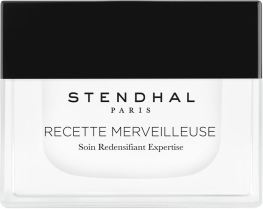
Stendhal Recette Merveilleuse Expertise Redensifying Treatment 50 mlHealth and Beauty Treatments Stendhal Recette Merveilleuse Expertise Redensifying Treatment 50 ml It is a facial treatment with a lifting effect that regenerates and fills wrinkles. This anti-aging treatment contains in its formulation a sacred tree extract with active antioxidants that soften the signs of aging marked on the face, neck and décolleté. The skin is nourished, returns to the skin comfort and firmness. specific asset Tropical tree ""Baobab"" also known as "tree of life", since in times of drought it provides highly nutritious fruit and its huge trunk can store many liters of water. ?Nourishes the skin thanks to its high content of omega 3,6, and 9 and vitamins, prevents the signs of aging, repairs sun damage?, great anti-inflammatory power, reduces redness. Benefits - The skin increases its defense capabilities against the factors that cause photoaging. - Provides a lifting effect, fills in deep wrinkles and regenerates mature skin. - Offers the skin maximum comfort and nutrition. - Provides luminosity and corrects spots. How to use Apply morning and/or night, on clean skin and after the specific serum on the face, neck and décolleté.59,17 £*Shipping: 3,99 £Secure redirect to the provider
-
FT Synthetics FT Solutions Performance UDL 90 Pallet of 64The FT Solutions Performance UDL 90 (formerly FT Synthetics Silver) Underlayment is composed of 100% recyclable water-resistant polyolefin. UDL 90 underlayment is lightweight and durable and also provides the best protection available while also...4660,46 $*Shipping: 0,00 $Secure redirect to the provider
-
L'Oréal Paris Dermo Expertise Waterproof Eye and Lip Makeup RemoverHealth and Beauty Facial Cleansing L'Oréal Paris Dermo Expertise Waterproof Eye and Lip Makeup Remover - Eye and Lip Makeup Remover. - Special Waterproof and Long Lasting. - Quick and easy makeup remover. Ultra-soft, suitable for sensitive eyes and contact lens wearers. - Removes all types of makeup, combining effectiveness and softness without a greasy effect. How to use: - Shake the bottle to mix the 2 phases and pour a few drops onto a cotton pad. - Apply to the face without rubbing or rinsing. Repeat the gesture until the cotton is perfectly clean.4,27 £*Shipping: 3,99 £Secure redirect to the provider
-
What is grammatically correct: Cogito ergo sum or Ego cogito ergo sum?
The grammatically correct phrase is "Cogito ergo sum." This is the original Latin phrase coined by philosopher René Descartes, which translates to "I think, therefore I am." The phrase emphasizes the primacy of thought and self-awareness in establishing one's existence. **
-
What was Nietzsche's objection to Cogito ergo sum?
Nietzsche's objection to Cogito ergo sum, or "I think, therefore I am," stems from his belief that the self is not a fixed entity but rather a fluid and ever-changing construct. He argued that the idea of a stable and unified self, as implied by Descartes' statement, is an illusion. Nietzsche believed that the self is a product of various conflicting forces and influences, and that there is no essential core or unchanging identity to be found within it. Therefore, he rejected the notion that one's existence can be proven simply through the act of thinking. **
-
Do you find the Cogito ergo sum convincing?
As an AI language model, I don't have personal beliefs or experiences, but I can provide information. The phrase "Cogito ergo sum" (I think, therefore I am) is a fundamental concept in the philosophy of René Descartes. It suggests that the act of thinking proves one's existence. Some find this argument convincing because it provides a starting point for knowledge and certainty. Others may find it unconvincing because it relies on the assumption that thinking is the only way to prove existence, and it doesn't account for non-thinking beings. Ultimately, the persuasiveness of the Cogito ergo sum depends on one's philosophical perspective. **
-
Does anyone have a good term paper topic on the Cogito argument?
One potential term paper topic on the Cogito argument could be an analysis of its implications for the nature of self and consciousness. You could explore how Descartes' assertion "I think, therefore I am" shapes our understanding of the self and its relationship to thought. Another interesting angle could be to examine criticisms of the Cogito argument and evaluate whether it truly provides a solid foundation for knowledge. Additionally, you could investigate how the Cogito argument has influenced modern philosophy and its relevance in contemporary discussions on the mind-body problem. **
Similar search terms for Cogito
-
Sesderma Reti Age 5 Liposomal Serum Anti-Aging Innovation 30mLA facial serum for wrinkles and signs of ageing. Reduces wrinkles and fine lines. Hydrates and strengthens barrier. Restores youthful radiance. 5-Retinoid System: smooths wrinkles, accelerates renewal, and boosts collagen. Biomimetic Peptides: fill expression lines by stimulating collagen synthesis.53,26 £*Shipping: 5,22 £Secure redirect to the provider
-
MALACASA MINA Versatility Porcelain Dinnerware Set Service for 6Elevate your dining experience with the MALACASA MINA Porcelain Dinnerware Set. Available in classic all-white or sophisticated white with black rim designs, this collection offers versatility and elegance for everyday meals and special occasions.147,99 $*Shipping: 0,00 $Secure redirect to the provider
-
MALACASA MINA Versatility Porcelain Dinnerware Set Service for 6Elevate your dining experience with the MALACASA MINA Porcelain Dinnerware Set. Available in classic all-white or sophisticated white with black rim designs, this collection offers versatility and elegance for everyday meals and special occasions.161,99 $*Shipping: 0,00 $Secure redirect to the provider
-
MALACASA MINA Versatility Porcelain Dinnerware Set Service for 4Elevate your dining experience with the MALACASA MINA Porcelain Dinnerware Set. Available in classic all-white or sophisticated white with black rim designs, this collection offers versatility and elegance for everyday meals and special occasions.93,49 $*Shipping: 0,00 $Secure redirect to the provider
-
What is the difference between Cogito ergo sum and Dubito ergo sum?
The phrase "Cogito ergo sum" is a Latin phrase meaning "I think, therefore I am," which was famously coined by philosopher René Descartes. This phrase represents Descartes' assertion that the act of thinking proves one's existence. On the other hand, "Dubito ergo sum" is a Latin phrase meaning "I doubt, therefore I am." This phrase is a play on Descartes' original statement, and it emphasizes the role of doubt in the process of self-awareness and existence. While "Cogito ergo sum" focuses on the act of thinking, "Dubito ergo sum" emphasizes the act of doubting as a means of affirming one's existence. **
-
Does anyone have a good term paper topic for the Cogito argument?
One potential term paper topic for the Cogito argument could be an analysis of the implications of Descartes' famous statement "I think, therefore I am" on the nature of self and consciousness. This could involve exploring the relationship between thinking and existence, as well as the implications for the mind-body problem and the nature of reality. Another potential topic could be a critical evaluation of the Cogito argument in the context of contemporary philosophy, considering objections and alternative perspectives on the nature of self-awareness and existence. Finally, a term paper could explore the historical and cultural significance of the Cogito argument, examining its impact on the development of modern philosophy and its influence on broader intellectual and cultural movements. **
-
What is the history of Ego cogito ergo sum or I think, therefore I am?
The phrase "Cogito, ergo sum" or "I think, therefore I am" was famously coined by the French philosopher René Descartes in his work "Discourse on the Method" in 1637. Descartes used this statement as a foundational element in his philosophy to establish certainty in knowledge. He argued that doubt could be cast on everything except the act of doubting itself, which requires a thinking entity. This led him to conclude that the existence of a thinking self, or ego, is indubitable. The phrase has since become a fundamental concept in Western philosophy and epistemology. **
-
I don't understand the steps Descartes goes through to reach the conclusion Cogito ergo sum.
Descartes begins by doubting everything he knows in order to find a foundation of certainty. He realizes that even if he doubts everything, he cannot doubt the fact that he is doubting, which leads him to the realization that he must exist as a thinking thing. This leads to his famous conclusion, "Cogito, ergo sum," meaning "I think, therefore I am," asserting that his ability to doubt and think proves his existence as a thinking being. **
* All prices are inclusive of VAT and, if applicable, plus shipping costs. The offer information is based on the details provided by the respective shop and is updated through automated processes. Real-time updates do not occur, so deviations can occur in individual cases. ** Note: Parts of this content were created by AI.