Buy profiservice.eu ?
We are moving the project
profiservice.eu .
Are you interested in purchasing the domain
profiservice.eu ?
domain@kv-gmbh.de · 0541-91531010
Buy profiservice.eu ?
What does 'leur' and 'lui' mean?
In French, 'leur' is a pronoun that means 'their' or 'them' when referring to a group of people or things. It is used to indicate possession or indirect object. On the other hand, 'lui' is a pronoun that means 'him' or 'her' when referring to a singular person. It is used to indicate possession or as an indirect object. **
How is "eux" or "leur" used in French?
"Eux" and "leur" are both pronouns used in French to refer to people or things. "Eux" is used as a direct object pronoun to replace a group of people or things, while "leur" is used as an indirect object pronoun to replace a group of people. For example, "Je les ai vus" (I saw them) uses "les" as a direct object pronoun, while "Je leur ai parlé" (I spoke to them) uses "leur" as an indirect object pronoun. **

Similar search terms for Leur
Top-Angebote
Products related to Leur:
-
L'Oréal Paris Dermo Expertise Waterproof Eye and Lip Makeup RemoverHealth and Beauty Facial Cleansing L'Oréal Paris Dermo Expertise Waterproof Eye and Lip Makeup Remover - Eye and Lip Makeup Remover. - Special Waterproof and Long Lasting. - Quick and easy makeup remover. Ultra-soft, suitable for sensitive eyes and contact lens wearers. - Removes all types of makeup, combining effectiveness and softness without a greasy effect. How to use: - Shake the bottle to mix the 2 phases and pour a few drops onto a cotton pad. - Apply to the face without rubbing or rinsing. Repeat the gesture until the cotton is perfectly clean.4,25 £*Shipping: 3,99 £Secure redirect to the provider
-
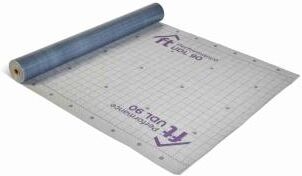
FT Synthetics FT Solutions Performance UDL 90 Pallet of 64The FT Solutions Performance UDL 90 (formerly FT Synthetics Silver) Underlayment is composed of 100% recyclable water-resistant polyolefin. UDL 90 underlayment is lightweight and durable and also provides the best protection available while also...4660,46 $*Shipping: 0,00 $Secure redirect to the provider
-
Sesderma Reti Age 5 Liposomal Serum Anti-Aging Innovation 30mLA facial serum for wrinkles and signs of ageing. Reduces wrinkles and fine lines. Hydrates and strengthens barrier. Restores youthful radiance. 5-Retinoid System: smooths wrinkles, accelerates renewal, and boosts collagen. Biomimetic Peptides: fill expression lines by stimulating collagen synthesis.53,26 £*Shipping: 5,22 £Secure redirect to the provider
-
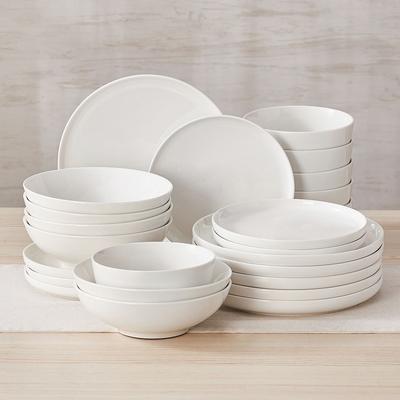
MALACASA MINA Versatility Porcelain Dinnerware Set Service for 6Elevate your dining experience with the MALACASA MINA Porcelain Dinnerware Set. Available in classic all-white or sophisticated white with black rim designs, this collection offers versatility and elegance for everyday meals and special occasions.147,99 $*Shipping: 0,00 $Secure redirect to the provider


-
How are the object pronouns lui and leur used?
The object pronouns lui and leur are used to replace indirect objects in French. Lui is used to replace singular indirect objects, while leur is used to replace plural indirect objects. These pronouns come before the verb in a sentence and agree in gender and number with the noun they are replacing. For example, "Je lui parle" means "I am talking to him/her" and "Je leur donne des cadeaux" means "I am giving them gifts." **
-
When do I use leur and leurs in French?
You use "leur" when you want to indicate possession or belonging for a singular noun, and "leurs" when you want to indicate possession or belonging for plural nouns. For example, "leur maison" means "their house" (singular), and "leurs voitures" means "their cars" (plural). **
-
'I don't understand the use of lui and leur?'
In French, "lui" and "leur" are both used as indirect object pronouns to replace nouns that are the recipients of the action. "Lui" is used to refer to a singular masculine or feminine noun, while "leur" is used to refer to a plural noun. For example, "Je lui ai donné le livre" means "I gave him/her the book," and "Je leur ai donné les livres" means "I gave them the books." It's important to remember that these pronouns must agree in gender and number with the noun they are replacing. **
-
What is the difference between ses, leur and leurs?
Ses, leur, and leurs are all possessive adjectives in French, but they are used in different contexts. "Ses" is used to indicate possession by a singular third person, "leur" is used for a singular third person, and "leurs" is used for plural third person. For example, "ses chaussures" means "his/her shoes," "leur maison" means "their house," and "leurs voitures" means "their cars." It's important to pay attention to the number and gender of the noun being possessed in order to choose the correct possessive adjective. **

What is the difference between leur and leurs in French?
In French, "leur" is used as a singular possessive pronoun meaning "their" when referring to one person or thing. On the other hand, "leurs" is the plural form of "leur" and is used when referring to multiple people or things. So, the main difference between "leur" and "leurs" is that "leur" is singular and "leurs" is plural. **
How do you use the object pronouns lui and leur?
The object pronoun "lui" is used to replace indirect objects referring to a singular person, while "leur" is used to replace indirect objects referring to plural people. For example, "Je lui parle" means "I am talking to him/her" and "Je leur donne des cadeaux" means "I am giving gifts to them." These pronouns come before the verb in a sentence and help avoid repetition of the indirect object. **
Top-Angebote
Products related to Leur:
-
EISENBERG Anti-Ageing Expertise skin care setEISENBERG Anti-Ageing Expertise, , Skin Serums for Women, Everything for beautiful-looking skin in one package. The EISENBERG Anti-Ageing Expertise beauty gift set contains not one but several products to help you create or enrich your daily beauty routine and make you or your loved ones happy to get it as a gift. The set contains: Eisenberg Classique Soin Anti-Âge anti-wrinkle firming cream 50 ml Eisenberg Classique Hydra Lifting light gel-cream for intensive hydration 15 ml Eisenberg Classique Sérum Régénérant Liftant anti-wrinkle lifting serum for tired skin 7,5 ml Characteristics: a set of cosmetic products for everyday use products for deep nourishment and hydration for perfectly soft and smooth skin a treat for any woman How to use: Use every product from the cosmetic set according to the instructions.128,00 £*Shipping: 3,99 £Secure redirect to the provider
-
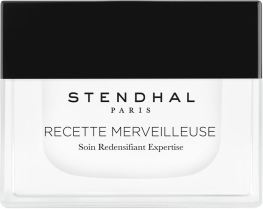
Stendhal Recette Merveilleuse Expertise Redensifying Treatment 50 mlHealth and Beauty Treatments Stendhal Recette Merveilleuse Expertise Redensifying Treatment 50 ml It is a facial treatment with a lifting effect that regenerates and fills wrinkles. This anti-aging treatment contains in its formulation a sacred tree extract with active antioxidants that soften the signs of aging marked on the face, neck and décolleté. The skin is nourished, returns to the skin comfort and firmness. specific asset Tropical tree ""Baobab"" also known as "tree of life", since in times of drought it provides highly nutritious fruit and its huge trunk can store many liters of water. ?Nourishes the skin thanks to its high content of omega 3,6, and 9 and vitamins, prevents the signs of aging, repairs sun damage?, great anti-inflammatory power, reduces redness. Benefits - The skin increases its defense capabilities against the factors that cause photoaging. - Provides a lifting effect, fills in deep wrinkles and regenerates mature skin. - Offers the skin maximum comfort and nutrition. - Provides luminosity and corrects spots. How to use Apply morning and/or night, on clean skin and after the specific serum on the face, neck and décolleté.58,99 £*Shipping: 3,99 £Secure redirect to the provider
-
L'Oréal Paris Dermo Expertise Waterproof Eye and Lip Makeup RemoverHealth and Beauty Facial Cleansing L'Oréal Paris Dermo Expertise Waterproof Eye and Lip Makeup Remover - Eye and Lip Makeup Remover. - Special Waterproof and Long Lasting. - Quick and easy makeup remover. Ultra-soft, suitable for sensitive eyes and contact lens wearers. - Removes all types of makeup, combining effectiveness and softness without a greasy effect. How to use: - Shake the bottle to mix the 2 phases and pour a few drops onto a cotton pad. - Apply to the face without rubbing or rinsing. Repeat the gesture until the cotton is perfectly clean.4,25 £*Shipping: 3,99 £Secure redirect to the provider
-
FT Synthetics FT Solutions Performance UDL 90 Pallet of 64The FT Solutions Performance UDL 90 (formerly FT Synthetics Silver) Underlayment is composed of 100% recyclable water-resistant polyolefin. UDL 90 underlayment is lightweight and durable and also provides the best protection available while also...4660,46 $*Shipping: 0,00 $Secure redirect to the provider
-
What does 'leur' and 'lui' mean?
In French, 'leur' is a pronoun that means 'their' or 'them' when referring to a group of people or things. It is used to indicate possession or indirect object. On the other hand, 'lui' is a pronoun that means 'him' or 'her' when referring to a singular person. It is used to indicate possession or as an indirect object. **
-
How is "eux" or "leur" used in French?
"Eux" and "leur" are both pronouns used in French to refer to people or things. "Eux" is used as a direct object pronoun to replace a group of people or things, while "leur" is used as an indirect object pronoun to replace a group of people. For example, "Je les ai vus" (I saw them) uses "les" as a direct object pronoun, while "Je leur ai parlé" (I spoke to them) uses "leur" as an indirect object pronoun. **
-
How are the object pronouns lui and leur used?
The object pronouns lui and leur are used to replace indirect objects in French. Lui is used to replace singular indirect objects, while leur is used to replace plural indirect objects. These pronouns come before the verb in a sentence and agree in gender and number with the noun they are replacing. For example, "Je lui parle" means "I am talking to him/her" and "Je leur donne des cadeaux" means "I am giving them gifts." **
-
When do I use leur and leurs in French?
You use "leur" when you want to indicate possession or belonging for a singular noun, and "leurs" when you want to indicate possession or belonging for plural nouns. For example, "leur maison" means "their house" (singular), and "leurs voitures" means "their cars" (plural). **
Similar search terms for Leur
-
Sesderma Reti Age 5 Liposomal Serum Anti-Aging Innovation 30mLA facial serum for wrinkles and signs of ageing. Reduces wrinkles and fine lines. Hydrates and strengthens barrier. Restores youthful radiance. 5-Retinoid System: smooths wrinkles, accelerates renewal, and boosts collagen. Biomimetic Peptides: fill expression lines by stimulating collagen synthesis.53,26 £*Shipping: 5,22 £Secure redirect to the provider
-
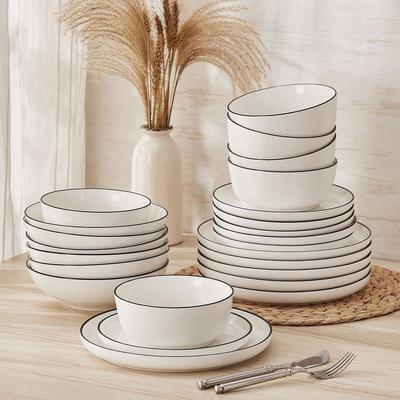
MALACASA MINA Versatility Porcelain Dinnerware Set Service for 6Elevate your dining experience with the MALACASA MINA Porcelain Dinnerware Set. Available in classic all-white or sophisticated white with black rim designs, this collection offers versatility and elegance for everyday meals and special occasions.147,99 $*Shipping: 0,00 $Secure redirect to the provider
-
MALACASA MINA Versatility Porcelain Dinnerware Set Service for 6Elevate your dining experience with the MALACASA MINA Porcelain Dinnerware Set. Available in classic all-white or sophisticated white with black rim designs, this collection offers versatility and elegance for everyday meals and special occasions.161,99 $*Shipping: 0,00 $Secure redirect to the provider
-
MALACASA MINA Versatility Porcelain Dinnerware Set Service for 4Elevate your dining experience with the MALACASA MINA Porcelain Dinnerware Set. Available in classic all-white or sophisticated white with black rim designs, this collection offers versatility and elegance for everyday meals and special occasions.93,49 $*Shipping: 0,00 $Secure redirect to the provider
-
'I don't understand the use of lui and leur?'
In French, "lui" and "leur" are both used as indirect object pronouns to replace nouns that are the recipients of the action. "Lui" is used to refer to a singular masculine or feminine noun, while "leur" is used to refer to a plural noun. For example, "Je lui ai donné le livre" means "I gave him/her the book," and "Je leur ai donné les livres" means "I gave them the books." It's important to remember that these pronouns must agree in gender and number with the noun they are replacing. **
-
What is the difference between ses, leur and leurs?
Ses, leur, and leurs are all possessive adjectives in French, but they are used in different contexts. "Ses" is used to indicate possession by a singular third person, "leur" is used for a singular third person, and "leurs" is used for plural third person. For example, "ses chaussures" means "his/her shoes," "leur maison" means "their house," and "leurs voitures" means "their cars." It's important to pay attention to the number and gender of the noun being possessed in order to choose the correct possessive adjective. **
-
What is the difference between leur and leurs in French?
In French, "leur" is used as a singular possessive pronoun meaning "their" when referring to one person or thing. On the other hand, "leurs" is the plural form of "leur" and is used when referring to multiple people or things. So, the main difference between "leur" and "leurs" is that "leur" is singular and "leurs" is plural. **
-
How do you use the object pronouns lui and leur?
The object pronoun "lui" is used to replace indirect objects referring to a singular person, while "leur" is used to replace indirect objects referring to plural people. For example, "Je lui parle" means "I am talking to him/her" and "Je leur donne des cadeaux" means "I am giving gifts to them." These pronouns come before the verb in a sentence and help avoid repetition of the indirect object. **
* All prices are inclusive of VAT and, if applicable, plus shipping costs. The offer information is based on the details provided by the respective shop and is updated through automated processes. Real-time updates do not occur, so deviations can occur in individual cases. ** Note: Parts of this content were created by AI.